NEW ROLES | WORKPLACE STRATEGY | OFFICE POLITICS | VISIBILITY
The Corporate Review
CAREER STRATEGY • WORKPLACE POWER • CAREER SURVIVAL
NEW ROLES | WORKPLACE STRATEGY | OFFICE POLITICS | VISIBILITY | CAREER SURVIVAL
The Corporate Review
CAREER STRATEGY • WORKPLACE POWER • PROFESSIONAL SURVIVAL
NEW ROLES | WORKPLACE STRATEGY | OFFICE POLITICS | VISIBILITY | CAREER SURVIVAL
CAREER INVESTIGATION
Your First 30 Days Aren’t Onboarding… They’re a Political Audition
63% of Hiring Managers Decided About You in 15 Minutes And You Had No Idea You Were Being Judged
By Emma Caldwell | Workplace Strategy Editor | Updated May 28, 2026

New hires are often evaluated long before their first formal review.
It's 2 AM.
You're lying in bed, staring at the ceiling, replaying the team meeting from this afternoon.
I had something to say. A good point, actually. But I hesitated half a second too long, someone else
jumped in, and the moment passed.
Did staying quiet make me look disengaged? Or worse invisible?
You've delivered solid work. Your manager said "great job" in Slack.
But there's this group on your team that goes to lunch every Thursday. They haven't invited you. There's a Slack channel where decisions seem to get made. You're not in it.
Is it intentional? Or am I supposed to ask?
So you say nothing. And the silence calcifies into something that feels permanent.
This isn't imposter syndrome.
This is something most professionals don't realize is happening until it's too late.
You're being graded on criteria no one told you about. And by the time you figure out what's actually being
evaluated, the judgment has already locked in.
The 90-Day Myth
You don't have 90 days. You have 44
Most people walk into a new role believing they have 90 days to settle in.
That's what onboarding programs imply. That's what managers say when they tell you to take your time
and ramp up.
But while you're waiting to feel ready, something else is happening.
Your colleagues are deciding who you are. Not based on your work, at least not yet.
They're deciding based on where you sit at lunch, whether you speak in meetings, how you ask questions, and how you recover from mistakes.
They're grading you on criteria no one articulated, using a rubric you never saw.
Research from Princeton shows that first impressions form in 100 milliseconds.
Hiring managers admit that 63% of their lasting impression is set within the first 15 minutes of meeting someone.
And once that impression hardens, it doesn't just fade.
Harvard behavioral research found it takes eight positive interactions to undo one negative first impression. Most professionals don't get eight chances.
Meanwhile, BambooHR tracked 1,565 new hires and found that 70% decide whether to stay or leave within the first 30 days, not 90.
The average decision window? Forty-four days.
After that, reputations calcify. You're not building a foundation anymore. You're correcting an impression you didn't know you made.
70%
of new hires decide whether to stay or leave within the first 30 days
44 days
average decision window before reputations begin to harden
8 interactions
often needed to undo one negative first impression
100ms
for a first impression to
form (Princeton)
63%
of lasting impression set
in the first 15 minutes
44 days
average decision window
for new hires (BambooHR)
Why “Just Do Good Work” Stopped Working
Your company taught you how to use Slack, where the bathrooms are, and what the PTO policy is.
What they didn't teach you was who actually makes decisions, which alliances matter, when to stay silent, and how to position your contributions so they're seen as strategic instead of just solid.
That gap between what onboarding covers and what actually determines whether you survive is where careers stall out.
Not because people aren't competent.
Because they're playing a game they didn't know existed.

“The first 30 days aren’t about proving you can do the job. Your résumé already did that. They’re about proving you understand the room.”
A Tale of Two New Hires
The Shift That Changed Everything
Let me tell you about two people who started the same week at the same company.
Sarah and Mark. Both senior-level hires. Both externally recruited. Both highly qualified.
Week One, Sarah focused on learning the systems. She was thorough, careful, didn't want to overstep.
She ate lunch at her desk most days because she didn't want to interrupt groups mid-conversation.
In meetings,she stayed quiet, wanting to observe first and contribute once she felt confident.
Mark did something different.
On Day Two, he asked a colleague to coffee and learned who the real decision-makers were, not just the names on the org chart.
By Week Two, he'd identified the office connector and built a relationship there.
In his first meeting, he asked one clarifying question and volunteered for one small action item. Nothing aggressive. Just visible.
By Week Three, Sarah was still eating lunch alone. Still the quiet one in meetings. Still "ramping up."
Mark was already joking with the VP. Getting invited to the informal PM syncs. Leading a sub-project.
Sarah kept thinking: What does he know that I don't? Did someone give him a cheat sheet I didn't get?
Why does he make it look so effortless?
She started Googling at 11 PM: How to build rapport at new job. Is it too late to fix a bad first impression?
By Week Four, the gap was permanent.
Sarah was competent but invisible. Mark was visible and influential.
Same company. Same starting point. Completely different trajectories.
The difference wasn't competence. It wasn't likability. It wasn't even luck.
It was that Mark understood something Sarah didn't...
The first 30 days are not onboarding. They're an invisible audition.
And the people who succeed aren't the ones who wait to feel ready. They're the ones who know exactly what's being evaluated and how to navigate it without looking like they're trying too hard.

Trying to understand the room

Known, trusted, and included
The difference was not charisma. It was a system for reading the invisible rules early.
The Real Evaluation
The Real Evaluation Isn't What You Think
Here's what most professionals don't realize.
The first 30 days aren't about proving you can do the job. Your resume already did that.
The first 30 days are about proving you fit.
Managers aren't evaluating your deliverables yet. They're evaluating whether you're adaptable, socially fluent, and politically aware.
They're watching how you ask questions, how you handle your first mistake, whether you understand informal power structures, and whether you can read a room.
This isn't office politics in the manipulative sense.
This is organizational survival.
And the reason most people struggle isn't because they're bad at politics. It's because no one ever taught them that this is what's actually happening.
Traditional onboarding programs operate on a comforting lie: that if you learn the systems and do good work, everything else will sort itself out.
But 88% of employees say their company's onboarding failed them.
Not because HR didn't try, but because onboarding teaches tasks while the real evaluation is happening on a completely different axis.
You're being graded on things like how fast you recover from mistakes, how you position your contributions, whether you know who to align with, and whether you can navigate ambiguity without becoming a problem.
These are the invisible rules.
And the professionals who figure them out early don't just survive. They become the ones everyone else watches and wonders: "How did they integrate so fast?"
The gap isn't intelligence. It's information.
Some people stumble into understanding these dynamics through trial and error. Most don't figure it out until six months in, after the critical window has already closed.
If you're already three weeks in and feeling the silence hardening, this is your reset.
If you're about to start and want to avoid the mistakes most people don't realize they're making, keep reading.
No more replaying meetings at 2 AM
Know what to say in your first meetings
Understand who really holds influence
Recover from early mistakes before they define you
Build visibility without looking fake or political
Walk into your 30-day review with a clear narrative
What They Know
What the Strategic 10% Know
There's a small group of professionals who seem to make it look effortless.
They start a new role and within 30 days, they're part of the inner circle. They're invited to the strategic conversations.
Their manager is already using them as a reference point for how things should be done.
It's not luck. It's not charisma. It's not even raw talent.
They have a system.
They know exactly what to do in their first meeting, their first lunch, their first mistake.
They understand the invisible rules before walking in the door, and they know how to build trust, visibility, and political capital without feeling fake or manipulative.
For years, this knowledge lived in the heads of executive coaches, organizational psychologists, and the small percentage of professionals who figured it out the hard way.
It wasn't written down anywhere. It wasn't taught.
You either learned it through painful trial and error, or you didn't learn it at all.
That's changing.
Where Professionals Are Getting the System
A group of researchers, former executives, and corporate strategists spent two years studying what separates the professionals who thrive in their first 30 days from those who stall out.
They analyzed onboarding research from Harvard, Princeton, and organizational behavior studies, interviewed hundreds of mid-to-senior-level professionals, and reverse-engineered the patterns that consistently lead to fast integration and long-term influence.
What they built is called The New Job Survival System.
It's not a course. It's not a coaching program.
It's a tactical, week-by-week intelligence system designed specifically for professionals entering new roles who want to build a reputation for competence, trustworthiness, and strategic value before their colleagues silently lock in a judgment that takes 6 to 12 months to undo.
This system exists for one reason: to close the gap between what traditional onboarding teaches and what actually determines whether you survive your first month.
What It Is
The New Job Survival System is your Month 1 operating system for the perception economy. It shows you how your reputation forms, what people are really judging in your first 30 days, and how to control the story before it locks in.
What it solves:
1. You stop walking in blind and letting your label form by accident.
2. You stop confusing hard work with being understood.
3. You stop missing the difference between alignment signals and competence signals.
4. You stop getting misread because you did the job well but signalled the wrong thing first.
What's inside:
A week-by-week Month 1 playbook
for first impressions, cultural adaptation, early delivery, mistake recovery, and the 30-day review
Audio guidance
that breaks down the invisible traps, the perception economy, and the four barriers of language, culture, environment, and power.
Micro-videos
that show how to handle real first-month moments like meetings, first mistakes, and early contributions.
A terminology log approach
so you can learn the language of the workplace fast and build early relational credit.
A first ownership move framework
for creating one useful artefact that makes your value visible.
A 30-day review system
that helps you present three wins, ask for feedback early, and walk into Month 2 with clarity.
A 30-60-90 plan
so you can shape the conversation instead of waiting to be evaluated.
The real outcome? You move from reacting to your environment to reading it fast, signaling the right things, and building a reputation on purpose instead of by accident.
Who It's For
This is built for mid-level professionals, individual contributors, or managers entering a new company as an external hire.
It's for people who are competent, conscientious, and politically cautious.
People who don't want to play dirty office politics but also recognize that being heads-down and hoping good work speaks for itself isn't working anymore.
If you're three weeks into a new role and already wondering if you made a mistake, this is for you.
If you're about to start a new position and want to avoid the mistakes most people don't realize they're making, this is for you.
If you've ever felt invisible despite doing solid work, this is for you.
What Changes When You Have This System
The 2AM replays stop.
You're not lying awake anymore replaying that meeting, wondering if you said the wrong thing. You walk into meetings knowing exactly what to say and when staying quiet builds more trust. You're not guessing. You're executing.
The "Did I already blow it?" panic disappears.
You know how to spot political landmines before stepping on them. You see the informal power structures forming in real-time. And when you do make a mistake because everyone does you have the 3-Step Reputation Repair Protocol that turns it into a trust-builder instead of a career-limiter.
The invisibility ends.
By Week 4, you're not eating lunch alone anymore. You're invited to the strategic conversations, not just the execution meetings. Your manager mentions your work in exec meetings without you asking. People know your name. And they know what you're good at.
The confusion about invisible rules vanishes.
You see the invisible audition happening in real-time. You know who has real power versus who just has a fancy title. You know which alliances matter and which are just noise. You know how to position yourself without looking like you're trying too hard or playing games.
First-month political missteps that take 6-12 months to undo? Gone.
You never walk into a new role politically blind again. You know exactly how you're being judged. You know exactly what signals competence, trustworthiness, and strategic value. And you act correctly before your reputation locks in.
By Month 3:
Your manager says: "You've integrated faster than anyone I've seen." Not because you worked 80-hour weeks. Not because you're naturally charismatic. Because you had the system everyone else was guessing without.
Why It Works
What Makes It Different and Why It Works
Most corporate training teaches theory.
Most books on office politics feel manipulative.
Most coaching programs are expensive, slow, and generic.
This system is built on a mechanism most people have never heard of: the Invisible Audition.
The idea is simple but powerful.
Your first 30 days aren't onboarding. They're a silent, political, and cultural evaluation happening in real time.
Your colleagues are deciding if you're competent, trustworthy, and someone they want to work with.
These judgments form fast based on visual cues, social fluency, and recovery speed, not your project deliverables.
And once they harden, they're brutally difficult to change.
Traditional advice tells you to "be yourself" or "just do good work." That's not strategic. It's gaslighting.
The New Job Survival System teaches you how to navigate the invisible audition with precision.
It gives you the exact scripts, positioning strategies, and recovery protocols that turn the first 30 days from a terrifying guessing game into a controlled, repeatable process.
This isn't inspiration. It's survival engineering.
It's built on research from Breakthrough Advertising principles, organizational behavior studies, and real-world patterns from professionals who've successfully navigated dozens of first months.
It works because it doesn't ask you to become someone you're not.
It shows you how to be strategically yourself. How to build trust without schmoozing. How to be visible without being obnoxious.
How to recover from mistakes without looking defensive.
How to align with power without losing your integrity.
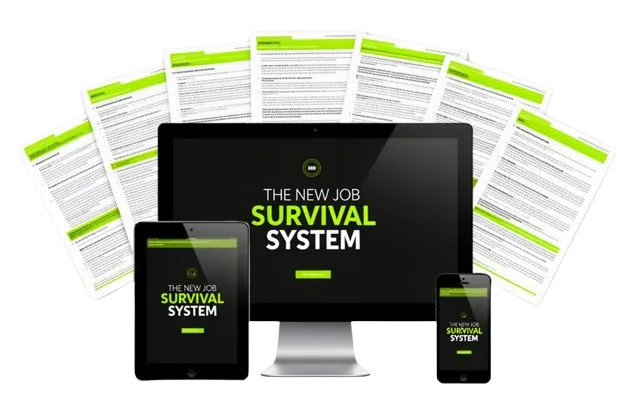
Want to Survive Your First 30 Days?
★★★★★
The New Job Survival System shows you how to read the room, build trust,
recover from mistakes, and become visible before your reputation locks in.
For professionals starting a new role, entering a new team, or trying
to reset their reputation before it hardens.
If this sounds like the kind of resource you wish you'd had on Day One, or if you're currently in your first few weeks and already feeling that creeping sense of "did I blow it," you can learn more about The New Job Survival System here.
It's priced at $27, not because it's basic, but because the people who need it most are often the ones stuck in that liminal space between jobs or fresh into a new role without the budget for $4,500 executive coaching.
This is the intelligence that should have been included in your onboarding packet.
But it wasn't. So here it is.
You don’t have 90 days. You have 44.
And the professionals who figure that out early are the ones who stop eating lunch alone, stop replaying
meetings at 2 AM, and start being the person everyone else wonders about:
"How did they integrate so fast?"
You're not underperforming. You're playing the wrong game.
Now you know what game you're actually in.
COMMENTS
98 COMMENTS

Carla R. 2 days ago
I wish I had this before starting my last role. I thought being quiet made me look professional. It just made me invisible.

Marcus P. 3 days ago
The part about lunch groups and informal Slack channels hit hard. Nobody tells you that’s where the real onboarding happens.

Jenna L. 4 days ago
Started using this in Week 2 of my new job. The meeting scripts alone helped me stop overthinking every interaction.

Tina H. 6 days ago
This explains why some people integrate so fast. It’s not luck. They know what signals to send early.
CAREER INVESTIGATION
Your First 30 Days Aren’t Onboarding… They’re a Political Audition
63% of Hiring Managers Decided About You in 15 Minutes And You Had No Idea You Were Being Judged
By Emma Rose | Workplace Strategy Editor | Updated May 28, 2026
New hires are often evaluated long before their first formal review.
It's 2 AM.
You're lying in bed, staring at the ceiling, replaying the team meeting from this afternoon.
I had something to say. A good point, actually. But I hesitated half a second too long, someone else jumped in, and the moment passed.
Did staying quiet make me look disengaged? Or worse invisible?
You've delivered solid work. Your manager said "great job" in Slack.
But there's this group on your team that goes to lunch every Thursday. They haven't invited you. There's a Slack channel where decisions seem to get made. You're not in it.
Is it intentional? Or am I supposed to ask?
So you say nothing. And the silence calcifies into something that feels permanent.
This isn't imposter syndrome.
This is something most professionals don't realize is happening until it's too late.
You're being graded on criteria no one told you about. And by the time you figure out what's actually being evaluated, the judgment has already locked in.
The 90-Day Myth
You don't have 90 days. You have 44
Most people walk into a new role believing they have 90 days to settle in.
That's what onboarding programs imply. That's what managers say when they tell you to take your time and ramp up.
But while you're waiting to feel ready, something else is happening.
Your colleagues are deciding who you are. Not based on your work, at least not yet.
They're deciding based on where you sit at lunch, whether you speak in meetings, how
you ask questions, and how you recover from mistakes.
They're grading you on criteria no one articulated, using a rubric you never saw.
Research from Princeton shows that first impressions form in 100 milliseconds.
Hiring managers admit that 63% of their lasting impression is set within the first 15 minutes of meeting someone.
And once that impression hardens, it doesn't just fade.
Harvard behavioral research found it takes eight positive interactions to undo one negative first impression. Most professionals don't get eight chances.
Meanwhile, BambooHR tracked 1,565 new hires and found that 70% decide whether to stay or leave within the first 30 days, not 90.
The average decision window? Forty-four days.
After that, reputations calcify. You're not building a foundation anymore. You're correcting an impression you didn't know you made.
100ms
for a first impression to
form (Princeton)
63%
of lasting impression set
in the first 15 minutes
44 days
average decision window
for new hires (BambooHR)
Your company taught you how to use Slack, where the bathrooms are, and what the PTO policy is.
What they didn't teach you was who actually makes decisions, which alliances matter, when to stay silent, and how to position your contributions so they're seen as strategic instead of just solid.
That gap between what onboarding covers and what actually determines whether you survive is where careers stall out.
Not because people aren't competent. Because they're playing a game they didn't know existed.
“The first 30 days aren’t about proving you can do the job. Your résumé already did that. They’re about proving you understand the room.”
A Tale of Two New Hires
Sarah and Mark started the same week. By Week 4, the gap was permanent.
Let me tell you about two people who started the same week at the same company.
Sarah and Mark. Both senior-level hires. Both externally recruited. Both highly qualified.
Week One, Sarah focused on learning the systems. She was thorough, careful, didn't want to overstep.
She ate lunch at her desk most days because she didn't want to interrupt groups mid-conversation.
In meetings,she stayed quiet, wanting to observe first and contribute once she felt confident.
Mark did something different.
On Day Two, he asked a colleague to coffee and learned who the real decision-makers were, not just the names on the org chart.
By Week Two, he'd identified the office connector and built a relationship there.
In his first meeting, he asked one clarifying question and volunteered for one small action item. Nothing aggressive. Just visible.
By Week Three, Sarah was still eating lunch alone. Still the quiet one in meetings. Still "ramping up."
Mark was already joking with the VP. Getting invited to the informal PM syncs. Leading a sub-project.
Sarah kept thinking: What does he know that I don't? Did someone give him a cheat sheet I didn't get? Why does he make it look so effortless?
She started Googling at 11 PM: How to build rapport at new job. Is it too late to fix a bad first impression?
By Week Four, the gap was permanent.
Sarah was competent but invisible. Mark was visible and influential.
Same company. Same starting point. Completely different trajectories.
The difference wasn't competence. It wasn't likability. It wasn't even luck.
It was that Mark understood something Sarah didn't...
The first 30 days are not onboarding. They're an invisible audition.
And the people who succeed aren't the ones who wait to feel ready. They're the ones who know exactly what's being evaluated and how to navigate it without looking like they're trying too hard.
Trying to understand the room
Known, trusted, and included
The difference was not charisma. It was a system for reading the invisible rules early.
The Real Evaluation
The Real Evaluation Isn't What You Think
Here's what most professionals don't realize.
The first 30 days aren't about proving you can do the job. Your resume already did that.
The first 30 days are about proving you fit.
Managers aren't evaluating your deliverables yet. They're evaluating whether you're adaptable, socially fluent, and politically aware.
They're watching how you ask questions, how you handle your first mistake, whether you understand informal power structures, and whether you can read a room.
This isn't office politics in the manipulative sense.
This is organizational survival.
And the reason most people struggle isn't because they're bad at politics. It's because no one ever taught them that this is what's actually happening.
Traditional onboarding programs operate on a comforting lie: that if you learn the systems and do good work, everything else will sort itself out.
But 88% of employees say their company's onboarding failed them.
Not because HR didn't try, but because onboarding teaches tasks while the real evaluation is happening on a completely different axis.
You're being graded on things like how fast you recover from mistakes, how you position your contributions, whether you know who to align with, and whether you can navigate ambiguity without becoming a problem.
These are the invisible rules.
And the professionals who figure them out early don't just survive. They become the ones everyone else watches and wonders, "How did they integrate so fast?"
The gap isn't intelligence. It's information.
Some people stumble into understanding these dynamics through trial and error. Most don't figure it out until six months in, after the critical window has already closed.
If you're already three weeks in and feeling the silence hardening, this is your reset.
If you're about to start and want to avoid the mistakes most people don't realize they're making, keep reading.
There's a small group of professionals who seem to make it look effortless.
They start a new role and within 30 days, they're part of the inner circle. They're invited to the strategic conversations.
Their manager is already using them as a reference point for how things should be done.
It's not luck. It's not charisma. It's not even raw talent.
They have a system.
They know exactly what to do in their first meeting, their first lunch, their first mistake.
They understand the invisible rules before walking in the door, and they know how to build trust, visibility, and political capital without feeling fake or manipulative.
For years, this knowledge lived in the heads of executive coaches, organizational psychologists, and the small percentage of professionals who figured it out the hard way.
It wasn't written down anywhere. It wasn't taught.
You either learned it through painful trial and error, or you didn't learn it at all. That's changing.
What the Strategic
What the Strategic 10% Know
A group of researchers, former executives, and corporate strategists spent two years studying what separates the professionals who thrive in their first 30 days from those who stall out.
They analyzed onboarding research from Harvard, Princeton, and organizational behavior studies, interviewed hundreds of mid-to-senior-level professionals, and reverse-engineered the patterns that consistently lead to fast integration and long-term influence.
What they built is called The New Job Survival System.
It's not a course. It's not a coaching program.
It's a tactical, week-by-week intelligence system designed specifically for professionals entering new roles who want to build a reputation for competence, trustworthiness, and strategic value before their colleagues silently lock in a judgment that takes 6 to 12 months to undo.
This system exists for one reason: to close the gap between what traditional onboarding teaches and what actually determines whether you survive your first month.
What It Is
The New Job Survival System is your Month 1 operating system for the perception economy. It shows you how your reputation forms, what people are really judging in your first 30 days, and how to control the story before it locks in.
What it solves:
1. You stop walking in blind and letting your label form by accident.
2. You stop confusing hard work with being understood.
3. You stop missing the difference between alignment signals and competence signals.
4. You stop getting misread because you did the job well but signalled the wrong thing first.
What's inside:
A week-by-week Month 1 playbook
for first impressions, cultural adaptation, early delivery, mistake recovery, and the 30-day review
Audio guidance
that breaks down the invisible traps, the perception economy, and the four barriers of language, culture, environment, and power.
Micro-videos
that show how to handle real first-month moments like meetings, first mistakes, and early contributions.
A terminology log approach
so you can learn the language of the workplace fast and build early relational credit.
A first ownership move framework
for creating one useful artefact that makes your value visible.
A 30-day review system
that helps you present three wins, ask for feedback early, and walk into Month 2 with clarity.
A 30-60-90 plan
so you can shape the conversation instead of waiting to be evaluated..
The real outcome?
You move from reacting to your environment to reading it fast, signaling the right things, and building a reputation on purpose instead of by accident.
The real outcome? You move from reacting to your environment to reading it fast, signaling the right things, and building a reputation on purpose instead of by accident.
Who It's For
Who It's For
This is built for mid-level professionals, individual contributors, or managers entering a new company as an external hire.
It's for people who are competent, conscientious, and politically cautious.
People who don't want to play dirty office politics but also recognize that being heads-down and hoping good work speaks for itself isn't working anymore.
If you're three weeks into a new role and already wondering if you made a mistake, this is for you.
If you're about to start a new position and want to avoid the mistakes most people don't realize they're making, this is for you.
If you've ever felt invisible despite doing solid work, this is for you.
What Changes
What Changes When You Have This System
The 2AM replays stop.
You're not lying awake anymore replaying that meeting, wondering if you said the wrong thing. You walk into meetings knowing exactly what to say and when staying quiet builds more trust. You're not guessing. You're executing.
The "Did I already blow it?" panic disappears.
You know how to spot political landmines before stepping on them. You see the informal power structures forming in real-time. And when you do make a mistake because everyone does you have the 3-Step Reputation Repair Protocol that turns it into a trust-builder instead of a career-limiter.
The invisibility ends.
By Week 4, you're not eating lunch alone anymore. You're invited to the strategic conversations, not just the execution meetings. Your manager mentions your work in exec meetings without you asking. People know your name. And they know what you're good at.
The confusion about invisible rules vanishes.
You see the invisible audition happening in real-time. You know who has real power versus who just has a fancy title. You know which alliances matter and which are just noise. You know how to position yourself without looking like you're trying too hard or playing games.
First-month political missteps that take 6-12 months to undo? Gone.
You never walk into a new role politically blind again. You know exactly how you're being judged. You know exactly what signals competence, trustworthiness, and strategic value. And you act correctly before your reputation locks in.
By Month 3:
Your manager says: "You've integrated faster than anyone I've seen." Not because you worked 80-hour weeks. Not because you're naturally charismatic. Because you had the system everyone else was guessing without.
Why It Works
What Makes It Different and Why It Works
Most corporate training teaches theory.
Most books on office politics feel manipulative.
Most coaching programs are expensive, slow, and generic.
This system is built on a mechanism most people have never heard of: the Invisible Audition.
The idea is simple but powerful.
Your first 30 days aren't onboarding. They're a silent, political, and cultural evaluation happening in real time.
Your colleagues are deciding if you're competent, trustworthy, and someone they want to work with. These judgments form fast based on visual cues, social fluency, and recovery speed, not your project deliverables.
And once they harden, they're brutally difficult to change.
Traditional advice tells you to "be yourself" or "just do good work." That's not strategic. It's gaslighting.
The New Job Survival System teaches you how to navigate the invisible audition with precision.
It gives you the exact scripts, positioning strategies, and recovery protocols that turn the first 30 days from a terrifying guessing game into a controlled, repeatable process.
This isn't inspiration. It's survival engineering.
It's built on research from Breakthrough Advertising principles, organizational behavior studies, and real-world patterns from professionals who've successfully navigated dozens of first months.
It works because it doesn't ask you to become someone you're not.
It shows you how to be strategically yourself. How to build trust without schmoozing. How to be visible without being obnoxious.
How to recover from mistakes without looking defensive. How to align with power without losing your integrity.
Want to Survive Your First 30 Days?
★★★★★
The New Job Survival System shows you how to read the room, build trust,
recover from mistakes, and become visible before your reputation locks in.
For professionals starting a new role, entering a new team, or trying to reset their reputation before it hardens.
If this sounds like the kind of resource you wish you'd had on Day One, or if you're currently in your first few weeks and already feeling that creeping sense of "did I blow it," you can learn more about The New Job Survival System here.
It's priced at $27, not because it's basic, but because the people who need it most are often the ones stuck in that liminal space between jobs or fresh into a new role without the budget for $4,500 executive coaching.
This is the intelligence that should have been included in your onboarding packet.
But it wasn't. So here it is.
You don't have 90 days. You have 44.
You don't have 90 days. You have 44.
And the professionals who figure that out early are the ones who stop eating lunch alone, stop replaying meetings at 2 AM, and start being the person everyone else wonders about:
"How did they integrate so fast?"
You're not underperforming.
You're playing the wrong game. Now you know what game you're actually in.
Why “Just Do Good Work” Stopped Working
No more replaying meetings at 2 AM
Know what to say in your first meetings
Understand who really holds influence
Recover from early mistakes before they define you
Build visibility without looking fake or political
Walk into your 30-day review with a clear narrative
70%
of new hires decide whether to stay or leave within the first 30 days
44 days
average decision window before reputations begin to harden
8 interactions
often needed to undo one negative first impression
COMMENTS
98 COMMENTS
Carla R. 2 days ago
I wish I had this before starting my last role. I thought being quiet made me look professional. It just made me invisible.
Marcus P. 3 days ago
The part about lunch groups and informal Slack channels hit hard. Nobody tells you that’s where the real onboarding happens.
Jenna L. 4 days ago
Started using this in Week 2 of my new job. The meeting scripts alone helped me stop overthinking every interaction.
Tina H. 6 days ago
This explains why some people integrate so fast. It’s not luck. They know what signals to send early.
The Corporate Review
Privacy Policy | Terms of Use | Advertising Disclosure
This is an advertorial and not a guarantee of workplace outcomes. Individual results may vary depending on role, organisation, manager, team culture, and execution. The article may include affiliate or promotional links.
© 2026 New Job Survival System.
The Corporate Review
Privacy Policy | Terms of Use | Advertising Disclosure
This is an advertorial and not a guarantee of workplace outcomes. Individual results may vary depending on role, organisation, manager, team culture, and execution. The article may include affiliate or promotional links.
© 2026 New Job Survival System.